
Make room for every part
Create part profiles, shared spaces, check-ins, memories, House Notes, Safe Room tools, polls, and therapy-prep records.

DID systems / Private support
A private app for DID systems to organize parts, fronting, memory, and support.
App Store, Google Play, and web
Made for you
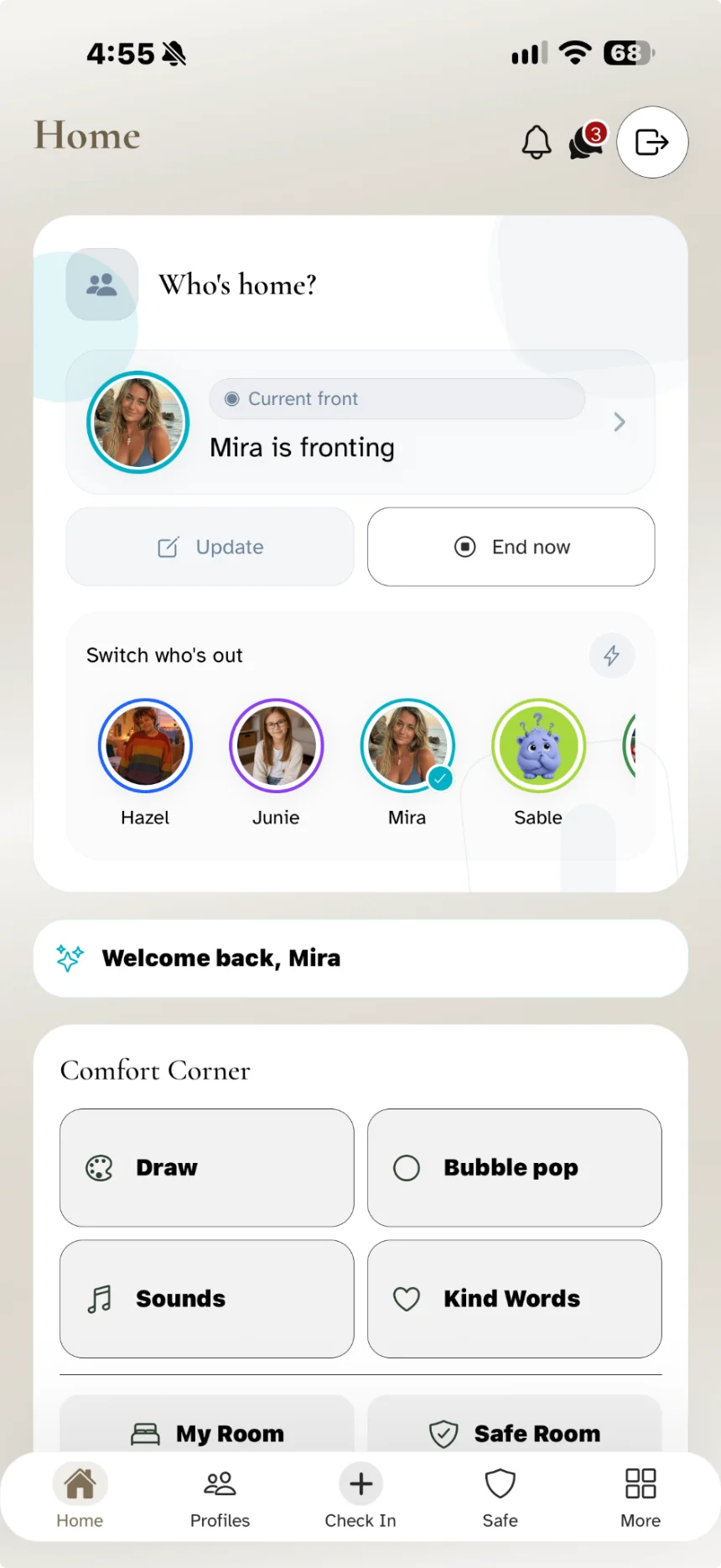
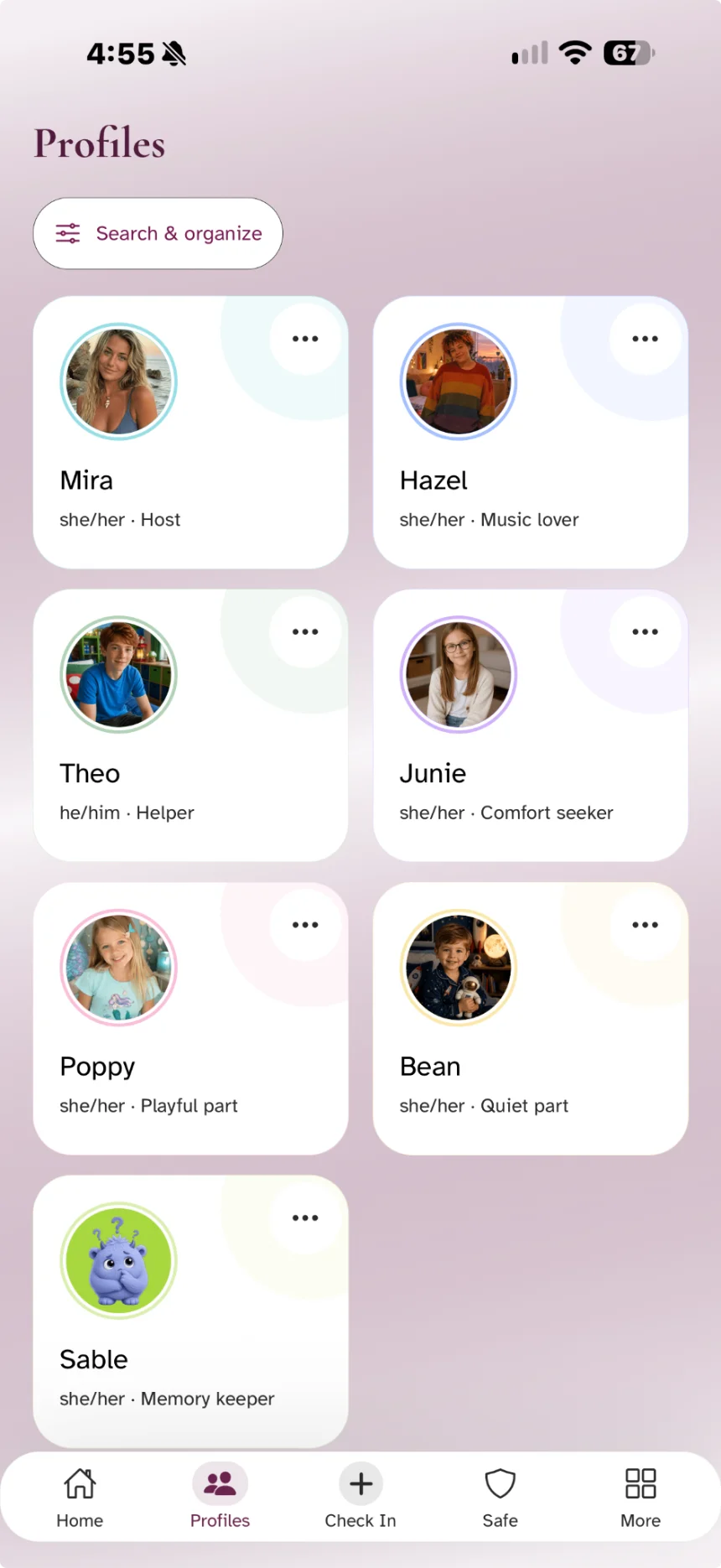
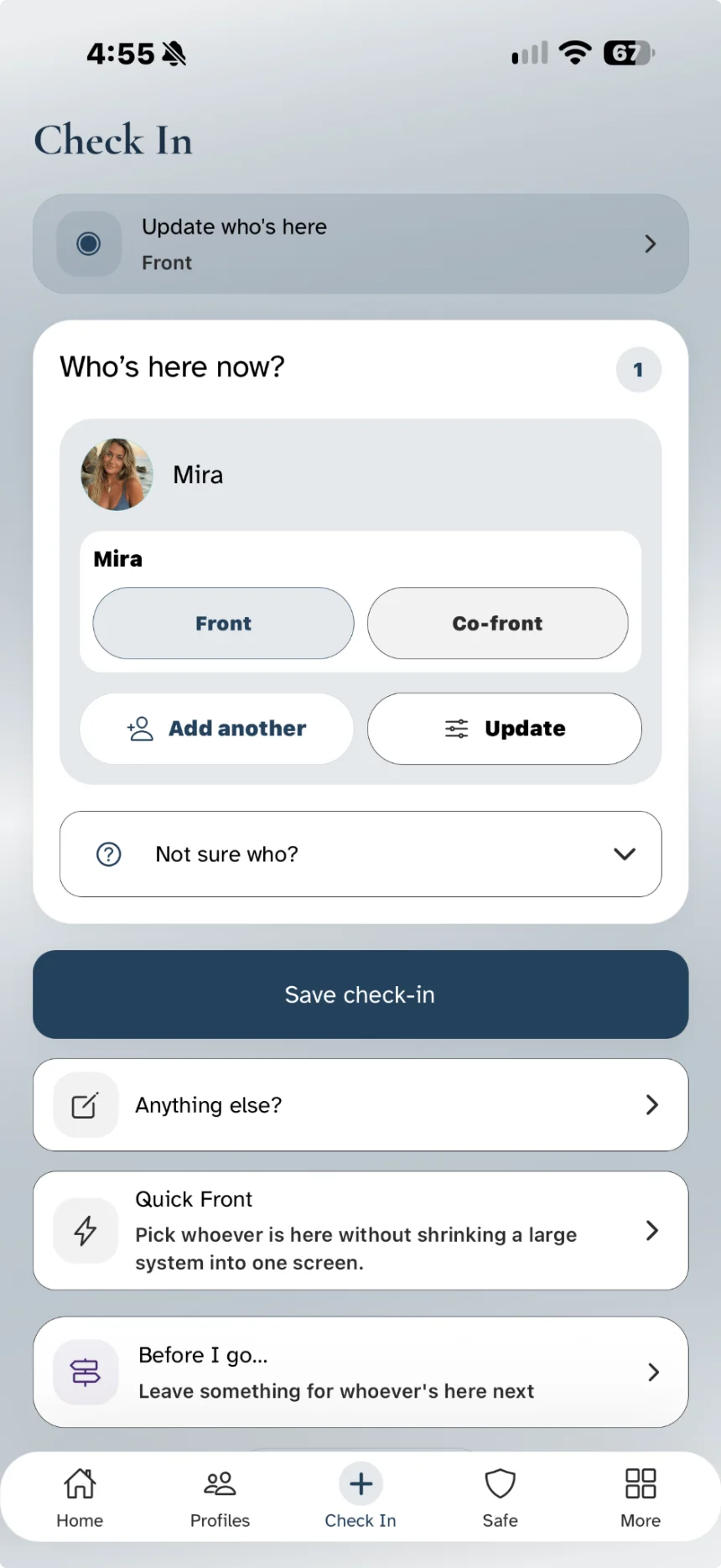
Inner House helps adults with dissociative identity disorder (DID) keep part profiles, record who is fronting, and prepare notes to share with trusted supports. Pictures in the app can be chosen from a library, uploaded by the user, or drawn by hand.
Create part profiles, shared spaces, check-ins, memories, House Notes, Safe Room tools, polls, and therapy-prep records.
Invite trusted supports only when you choose, with sharing review, Connections, Close support, Inner Circle, and export controls.
Use unlimited individual rooms, 75 included bedroom designs, House Search, House Map, custom fields, privacy controls, export, and deletion without Pro.
The app is a private system workspace. Systems can create profiles for parts, alters, system members, internal spaces, or any wording that fits; track who is fronting, co-fronting, near front, blended, blurry, unknown, or unnamed; save memories; write internal notes; and keep practical support information close.
Trusted supports are not added automatically. Connections, Close support, Inner Circle, share cards, exports, import review, privacy controls, App Lock, Quick Cover, notifications, widgets, and account deletion tools are built around deliberate user choice.
Inner House is not therapy, a diagnostic tool, crisis monitoring, emergency response, or AI interpretation. It organizes what users choose to record so they can notice, prepare, communicate, and share only what they decide to share.
Your private House records are separate from community groups and optional public-profile publishing. You choose what to share. Features such as live connection sharing or integrations can deliver updates after you enable them; exports remain under your control.
Inner House is for DID systems who want one private place to organize part profiles, fronting check-ins, memory entries, House Notes, Safe Room tools, therapy-prep records, polls, Connections, Inner Circle records, exports, imports, and privacy controls they choose to use.
No. Inner House does not diagnose anything, interpret you, provide therapy, or tell you what your records mean. It is user-led organization.
No. Inner House is not a crisis service. If you are in immediate danger or need urgent help, contact local emergency services or a trusted person nearby.
Inner House has no AI image generator.